Time Series Classification for Pain Detection
January 15, 2024
·
1 min read
Problem
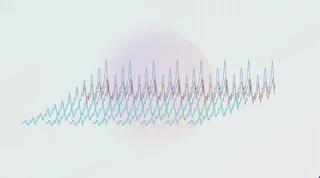
Autonomous pain classification in time-series data requires robust temporal modeling that can capture both short-term fluctuations and long-term dependencies from 30 joint measurements and 4 pain survey responses.
Architecture
Network Overview
flowchart TD
subgraph Input
I1[Time Series Input]
I2[30 Joint Measurements]
I3[4 Pain Surveys]
I4[3 Prosthetic Features]
end
subgraph Preprocessing
P1[Sliding Window]
P2[Window Size: 10]
P3[Stride: 2]
end
subgraph FeatureSplit
F1[Continuous Features]
F2[Categorical Features]
end
subgraph Encoders
E1[1D Conv Layer]
E2[BatchNorm + ReLU]
E3[Dropout 0.6]
E4[Embedding Layers]
end
subgraph RNN
R1[GRU Layer 1]
R2[GRU Layer 2]
R3[GRU Layer 3]
R4[Hidden: 64]
R5[Dropout: 0.4]
end
subgraph Attention
A1[Attention Weights]
A2[Context Vector]
end
subgraph Output
O1[FC Layer]
O2[Softmax]
O3[3 Classes]
end
I1 --> P1
I2 --> P1
I3 --> P1
I4 --> P1
P1 --> P2
P2 --> P3
P3 --> FeatureSplit
F1 --> E1
E1 --> E2
E2 --> E3
F2 --> E4
E3 --> R1
E4 --> R1
R1 --> R2
R2 --> R3
R3 --> R4
R4 --> R5
R5 --> A1
A1 --> A2
A2 --> O1
O1 --> O2
O2 --> O3

Authors
Lorenzo Ortolani
(he/him)
Roboticist · Physical AI & VLA for Humanoids
I build Physical AI — robots that perceive, reason, and act in the real world.
My focus is advancing Vision-Language-Action (VLA) policies so that a single
humanoid can learn a diverse library of skills and choose the right one for whatever
industrial task it faces, generalizing far beyond a single demonstration.
I co-founded TalOS Robotics AI to put this in operators’ hands, and I work across the
full stack: locomotion and navigation, learned manipulation, sim-to-real, and the
agent tooling that wraps it all together.